
Eye diseases can affect people of any age and, if not treated effectively, can lead to visual disability and blindness. Some of the most prevalent eye diseases are characterized by abnormal blood vessel growth, a process called neovascularization, which is seen in diseases like “wet” age-related macular degeneration (AMD), diabetic retinopathy, and ocular tumors. According to the organization Fighting Blindness Canada, AMD is a leading cause of blindness in older adults and, in Canada alone, affects approximately 2.5 million people. “Taken as a group, neovascular eye diseases are the main cause of blindness throughout the lifespan and globally tens of millions of people are affected,” said Tim Corson, a scientist and leading researcher in this field who will be joining U of T’s Leslie Dan Faculty of Pharmacy in January 2024. “Our research focuses on finding new ways to stop blood vessel growth by understanding how the abnormal growth occurs and by developing new molecules that we can use therapeutically to stop that disease process.”
Attacking abnormal blood vessel growth
In 2017 Corson’s research team was the first group to associate the enzyme ferrochelatase with abnormal blood vessel growth and is now exploring new inhibitors that could translate into novel treatments for neovascular eye diseases. There is also potential for this approach to be extended to investigating treatments for ocular cancers like retinoblastoma, a childhood cancer that typically affects children under five, that also require new blood vessels to grow and spread.
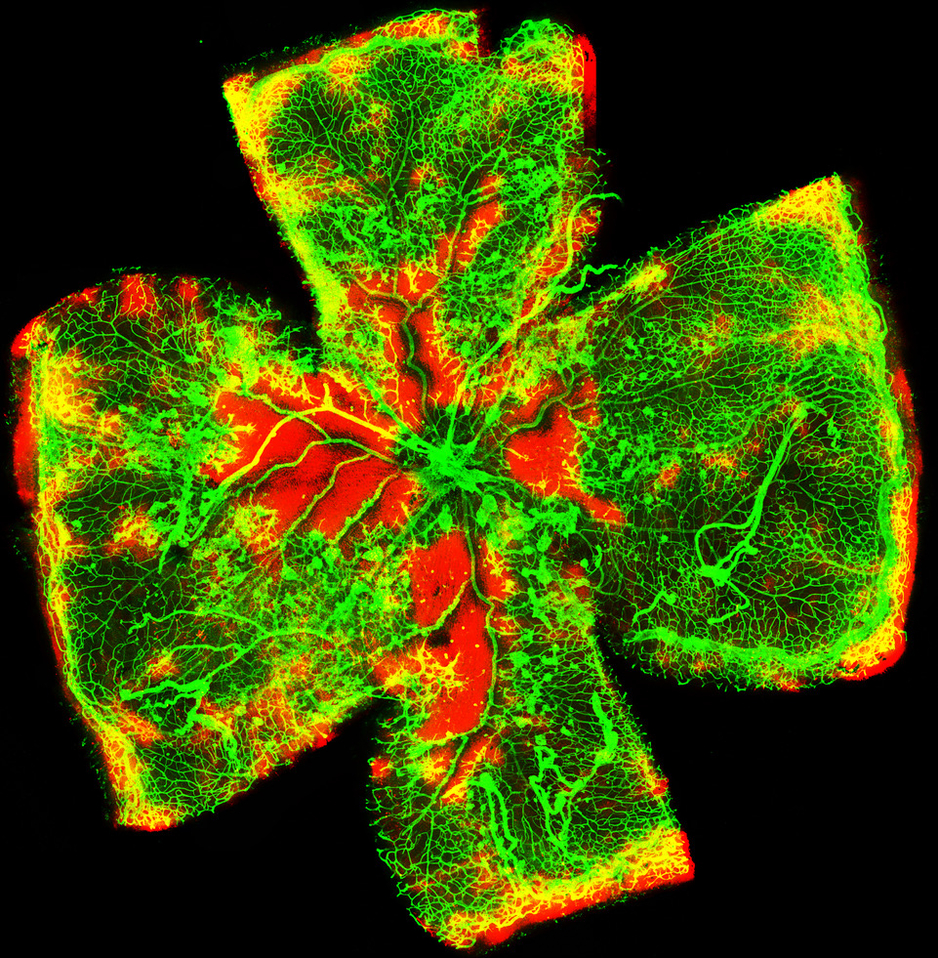
In September 2023, related work received significant support from the U.S. National Institute of Health (NIH)/National Eye Institute, with a grant of more than $2.3 million. “Our starting point has been taking molecules that we know can block blood vessel cell growth in a lab setting, figuring out how they work, and then using that knowledge to develop new, potentially more powerful molecules for treatment,” said Corson who is currently professor and chair of the Department of Pharmacology and Toxicology, Indiana University School of Medicine.
New drug formulations for eye disease could improve patient experience and effectiveness
While there are existing drugs used to treat neovascular eye disease, they all rely on the same mechanism of action and not all patients respond or experience improvement in their condition. With respect to wet AMD, as many as 30 per cent of patients do not respond. Additionally, a major challenge in the field is that all existing drugs for these conditions must be frequently injected into the eye, as often as monthly, which is invasive, painful, and difficult to achieve in low-resource settings, said Corson. Complementing his existing collaborations, Corson hopes to work with drug formulation experts at within the Leslie Dan Faculty Pharmacy and across U of T to have the opportunity to deliver new drugs to patients in different, less invasive ways.
“I am very excited to take some of our discoveries in a more translational direction. Most of the work we do is at the early stages of drug discovery, finding and validating molecules.”
“I am very excited to take some of our discoveries in a more translational direction. Most of the work we do is at the early stages of drug discovery, finding and validating molecules,” said Corson. “But with the formulation and drug development expertise within the Faculty there are exciting opportunities to come up with new ways to get our molecules to where they need to be, at the point of care.”
Translational research in drug discovery and development continues to be an area of focus and growth for the Leslie Dan Faculty of Pharmacy, with rapid and innovative technologies such as machine learning being more broadly adopted. “Professor Corson’s blend of mechanistic biology with drug discovery and development techniques is truly exciting,” said Micheline Piquette-Miller, acting dean of the Leslie Dan Faculty of Pharmacy. “We look forward to welcoming him and his research team in the new year and to the many opportunities ahead.”
More News
Image

Graduate researchers showcase innovation and entrepreneurship at GRIP 2026
The annual student-led symposium brought together attendees to showcase graduate research, hear from industry and alumni speakers, and explore the role of innovation and future technologies in advancing health care.
Read More
Image

Convocation speaker Dimitris Polygenis encourages graduates to embrace unexpected opportunities
McKesson Canada president and U of T pharmacy alum shared how pharmacists can apply learnings and values across the profession.
Read More
Image

“Support doesn’t always come in the form of a prescription”
Shasha Wolfe shares lived experiences accessing gender-affirming care with PharmD students to highlight importance of pharmacists in providing support.
Read More